
Classroom proof — Eva Fugitt
Eva Fugitt got spectacular results by addressing The Beautiful Problem.

The Beautiful Problem:
How to get  nside
nside
what students
need to succeed
utside at school and in real life?
Why haven’t others copied Ms Fugitt’s success?
Few are familiar with Ms Fugitt’s success, as documented in her book He Hit Me Back First!
Ms Fugitt brilliantly succeeded without ever naming The Beautiful Problem she was solving. Because she solved it in practice at the classroom level, the applicability of her work to the school system as a whole is easy to miss from her book alone.
Below is the process Ms Fugitt used to successfully solve The Beautiful Problem — without ever identifying what it is.
§
Letting go of being the “Perfect” teacher
— Eva Fugitt’s journey
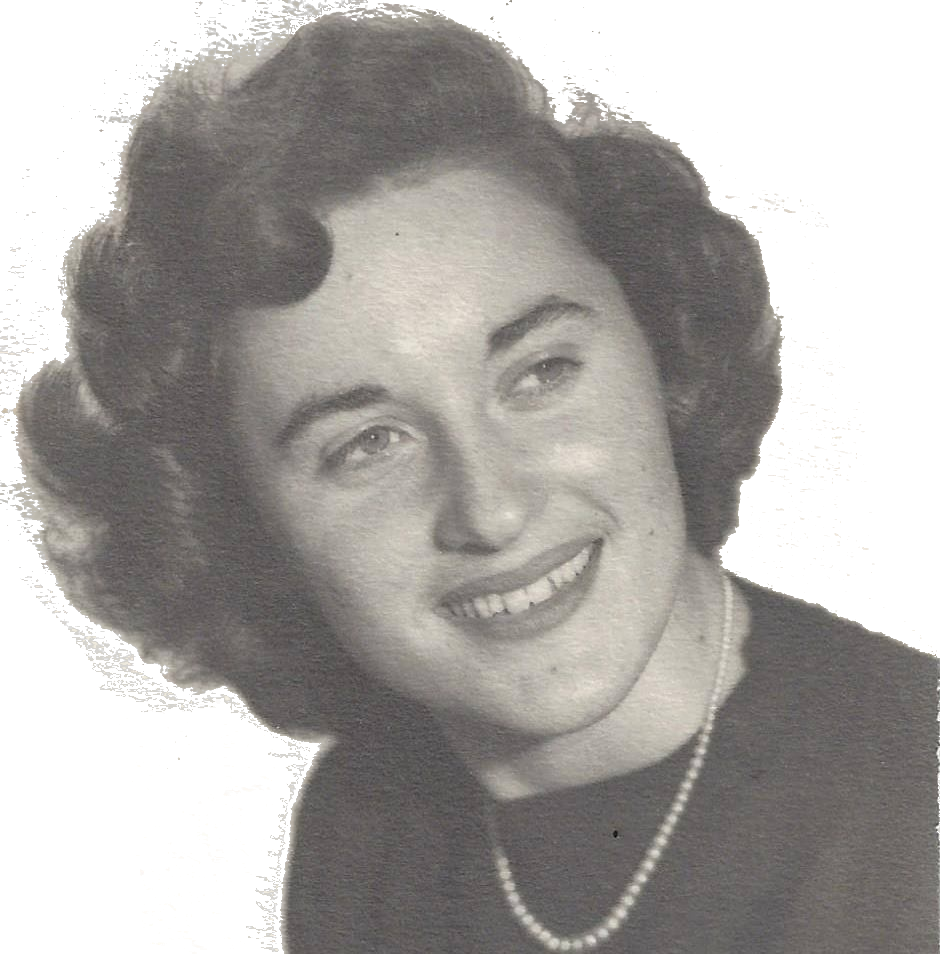
Ms Fugitt used psychology (psychosynthesis) to exercise children’s growing ability to self-direct their own lives.
An experienced teacher, Ms Fugitt started in Oakland Unified as a substitute before teaching 4th and 5th grades.
Ms Fugitt wanted
students to “be good” and to learn.
For herself she wanted a “better way” of working with children.
The problem:
too many students misbehaved and were not learning.
From her book, He Hit Me Back First!
The children came running into the room, jumping on chairs, walking across desks, yelling and laughing…
Describing herself as the external authoritarian:
I physically placed some children in their seats and dared them to move.
Ms Fugitt’s students, as described by parents, foster parents, and social workers:
“An incorrigible discipline problem.”
“Aggressive and undisciplined.”
“Constant fighting and use of obscenity.”
“A foster child. Mother in an institution and father an alcoholic. Three brothers in jail, one in San Quentin.”
“When she was five years old she saw her father kill her mother after he found her in bed with a lover.”
Ms Fugitt’s question?
How does a classroom teacher help children with such problems?
The guide
One day, while still working as a substitute:
two boys got into an argument over a comb and started to physically battle it out
A respectful silence
The teacher stood quietly in the doorway and said, “May I help you?” I looked at him. The children looked at him. Silence. A respectful silence. … He also had a quiet presence that penetrated us all. … He then placed a gentle hand on one boy’s shoulder and suggested that he “come with me for a while.” The class returned to work.
At lunch time I sought out that man and what a time of sharing we had!
I left that day determined to discover and develop within myself that same inner presence that radiated love and will, gentleness and firmness, and loving strength.
Steps to success
1. Let go of being the “Perfect” teacher.
2. Realize I can not “make” a child learn.
3. Realize I can not be “responsible” for the behavior of my students.
Ultimately, students themselves make their own choices.
4. Develop my ability to develop student ability to use their own will
This is part of what the Lead Out Method describes as getting students inside what they need to succeed.
It was difficult and even painful for me to learn that I could not be “responsible” for the behavior of my students. Each student ultimately makes his own choice of response, even within a limited environment.
Further:
There was no way I could “make” a child learn to multiply, learn to read, learn to “be good” unless the child’s awareness at the time permitted her to choose to do these things.
However, I could be responsible for my own behavior. I could be responsible for creating an environment that motivates, challenges, and invites a disciplined, creative response to learning.
The stakes could not be higher
IF Ms Fugitt succeeded
THEN students would succeed
BUT if she failed
students would continue their bad behavior and would not learn.
He Hit Me Back First!
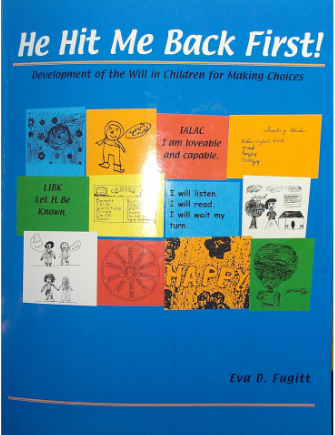
Schoolio’s founder, having read Ms Fugitt’s book and discovering it was out of print, took the initiative to recreate the book, contact Ms Fugitt and meet with her, in order to re-publish the book as an ebook.
Did she succeed?
Yes — spectacularly.
5th-grade class · 95% African-American
Students began the year reading at a 2.4 grade level, not even 3rd grade. By the end of the year, the average was 6.0 — an advancement of 3.6 years.
in one school year
Two students got all the way to 5th grade without anyone realizing they were gifted. Once they got inside what they needed to succeed, their gifts revealed themselves — and both were promoted to a class for the gifted.
“What’s this about goals? Tacelia does her homework as soon as she gets home — she says she’s winning her goal.”
A parent“Well, I’ve certainly been wondering what’s been happening. He’s changed so much [in self-esteem].”
A parent“I learned in Ms Fugitt’s class how to control myself.”
Brian — who arrived angry and in frequent fights, and became an honor studentWhat made the difference
None of this came from more drilling. Today’s school system asks children to learn, but does so while missing the educating — developing the person inside who does the learning.
Ms Fugitt led her students through a gamut of Inner Educational Exercises that grew their wellness, their wise part within, and above all their will to make their own choices.
That is exactly what the science now confirms: children succeed when we develop the inner capacities — self-direction, self-control, purpose — that a same-pace system never sets out to build. See how the science confirms it →
In essence, Ms Fugitt was solving The Beautiful Problem
The Beautiful Problem:
How to get nside
what students
need to succeed
utside at school and in real life?